
At CPM’s Manufacturing Hub, craftsmanship, precision, and metallurgical science come together to
transform raw precious metals into finely finished medallions, jewellery components, and specialist alloys.
During a guided visit, Neill – one of CPM’s most experienced craftsmen – walked us through every
stage of the process, from melting and alloying to pressing, polishing, and plating.
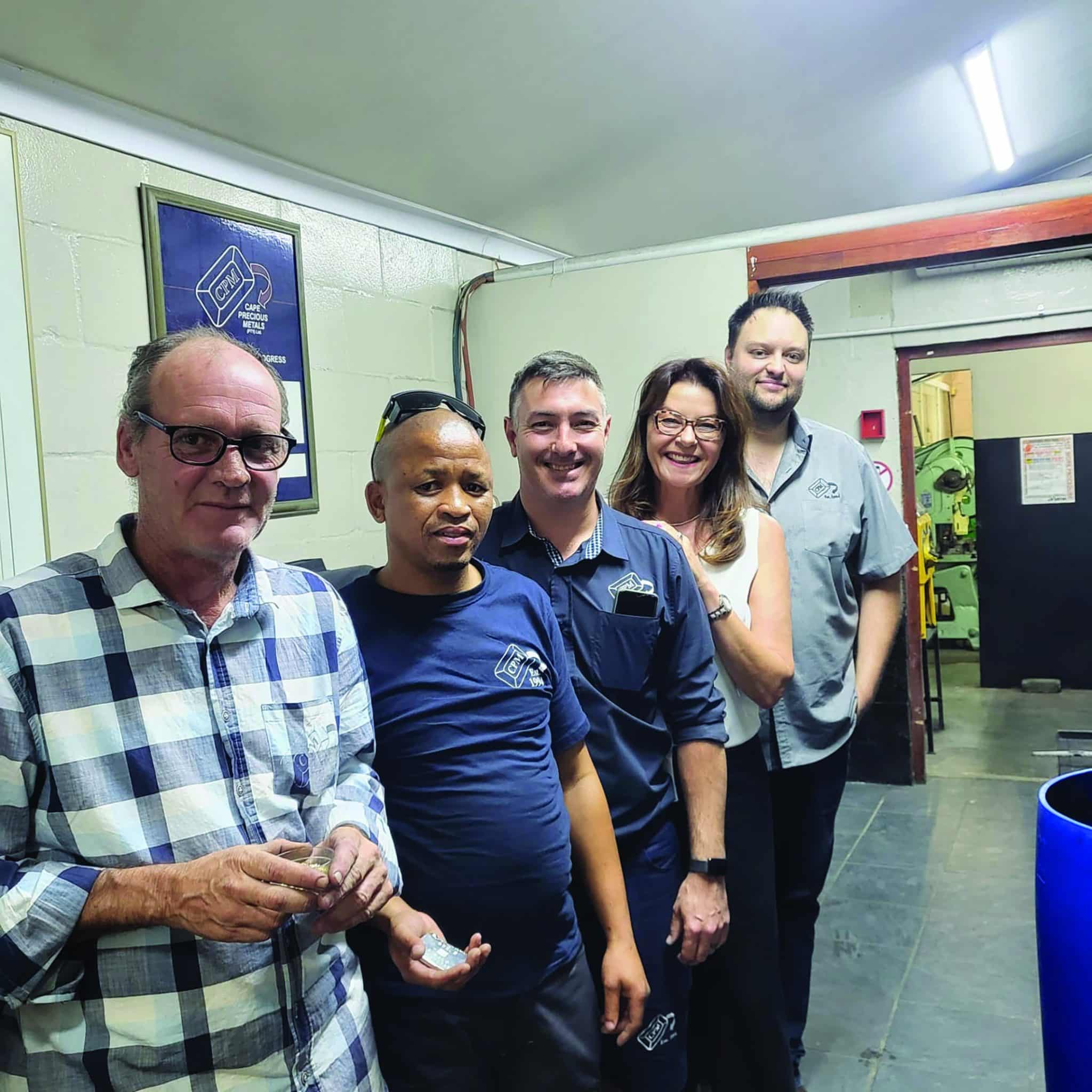
Meet the Team
Chester Ntlangana – Moon Production,
Francois Jonker – Internal Sales Manager,
Sancia Mincher from Jewellers’ Network
and Tiaan Coetzer – Production Assistant.
From Left to Right

FROM GRAIN TO MELT
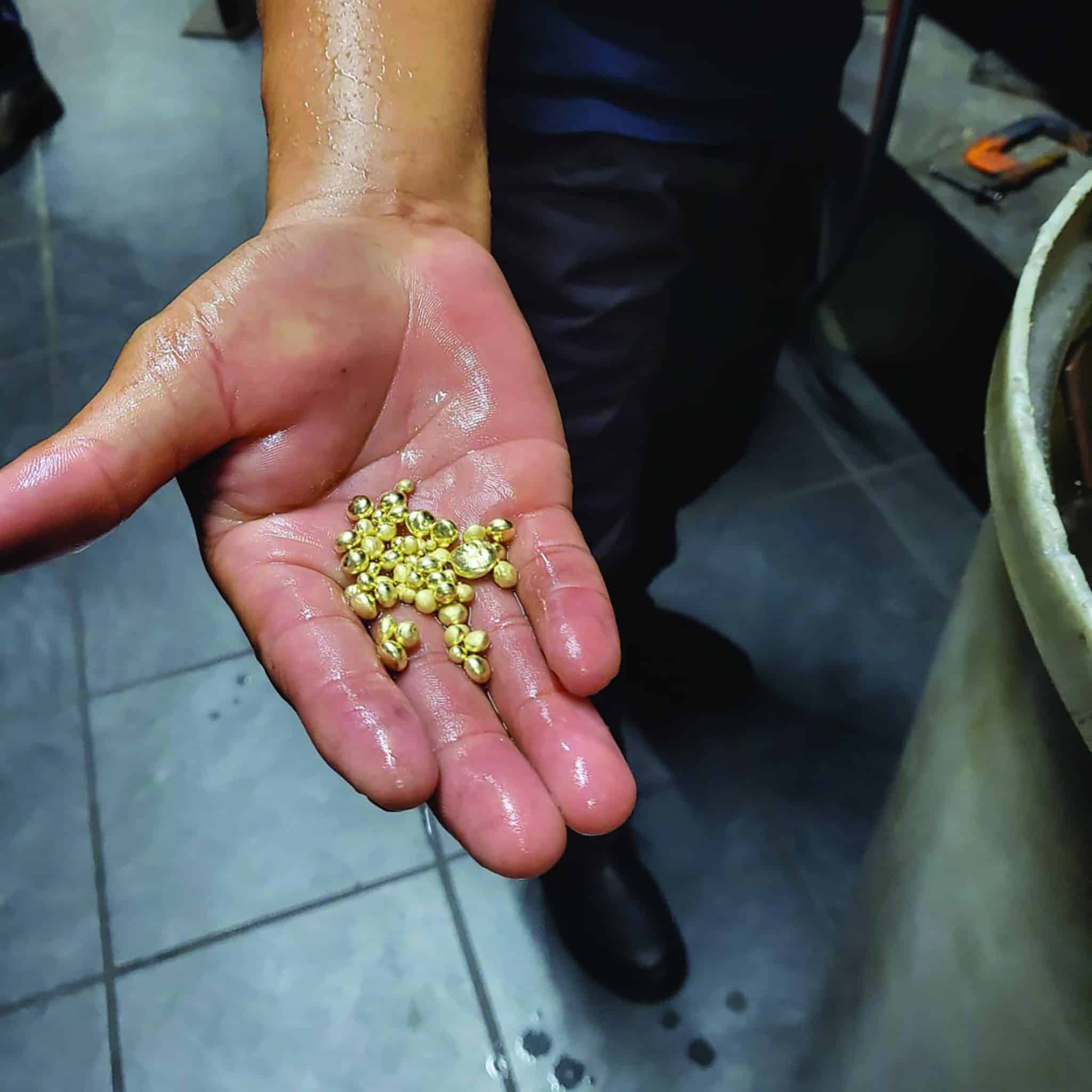
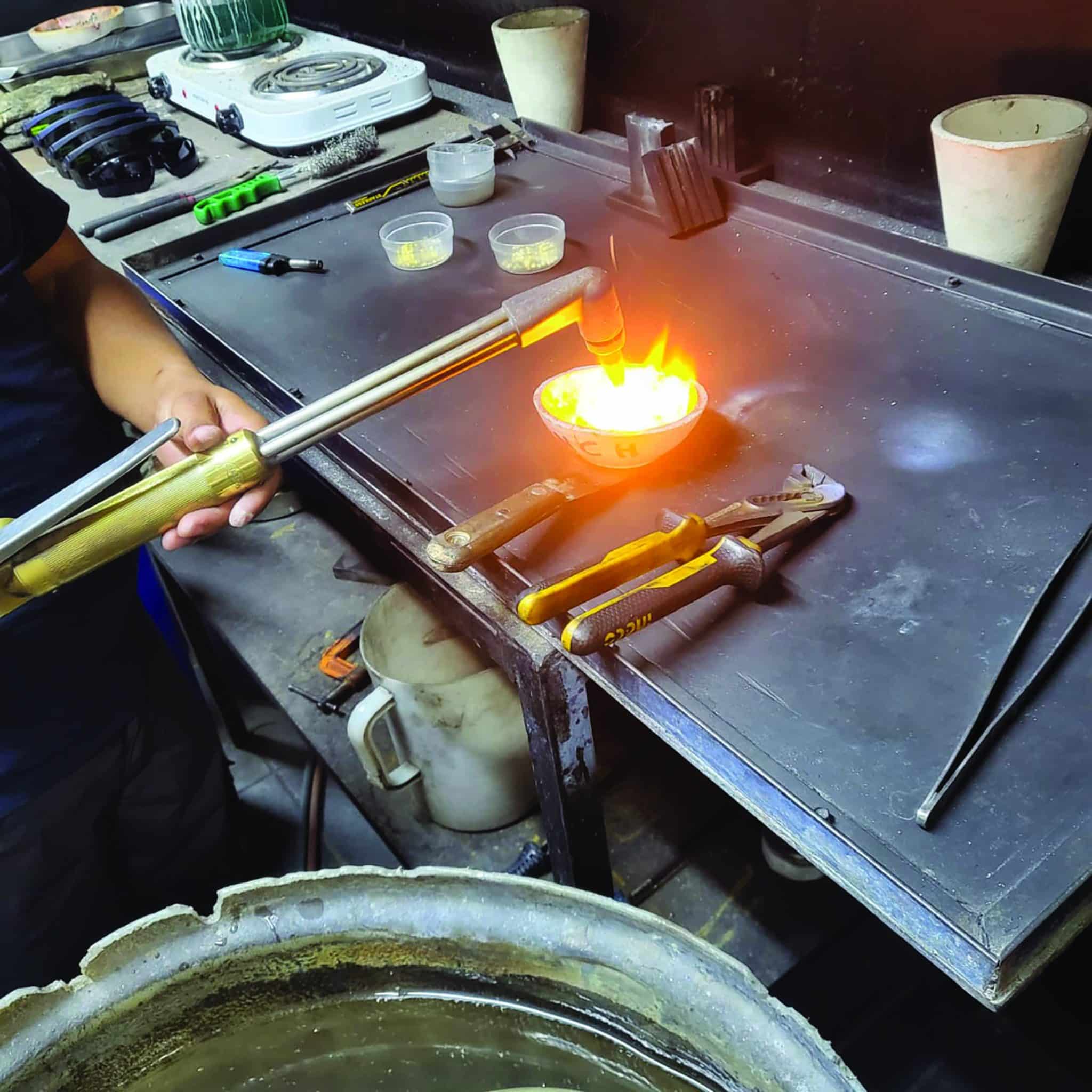
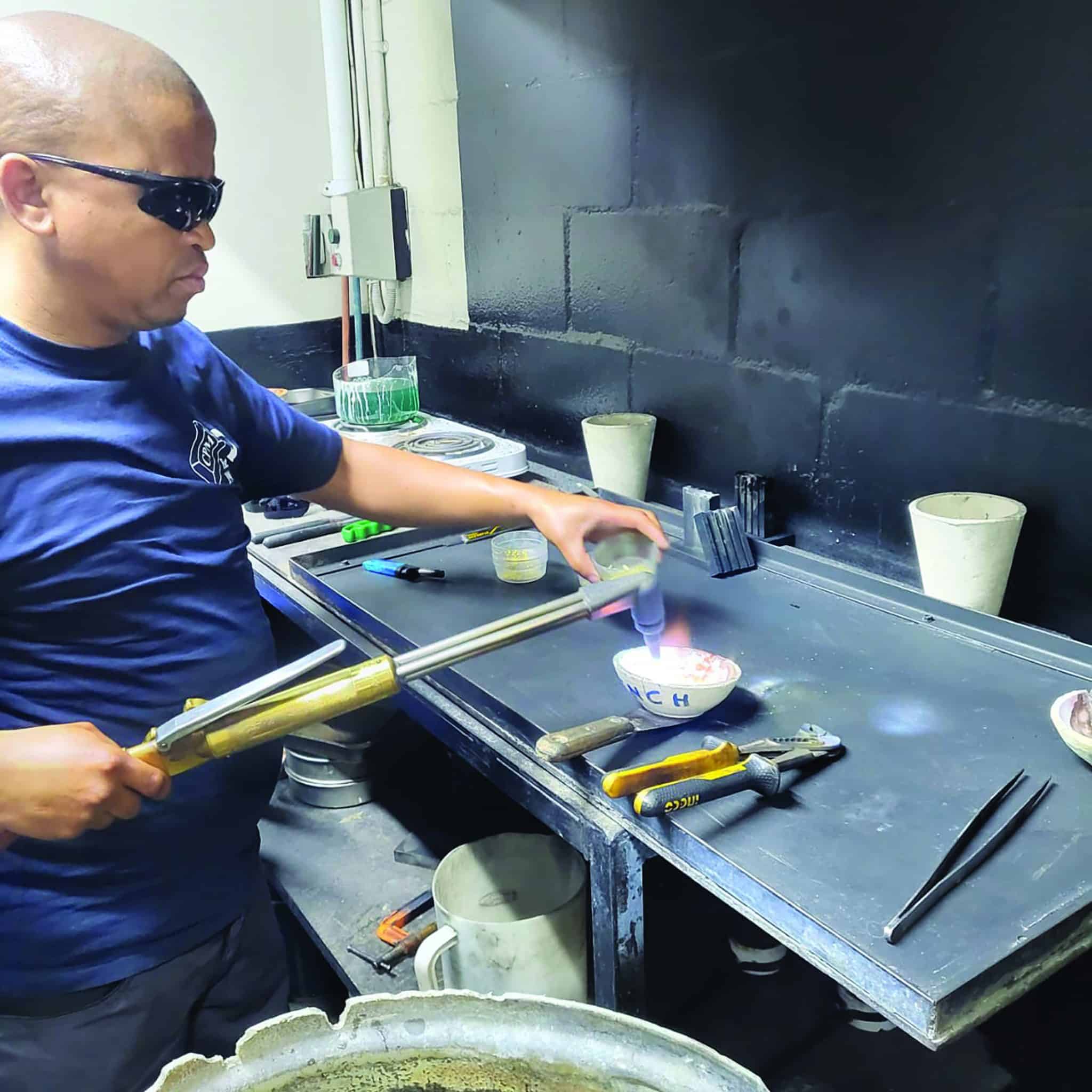
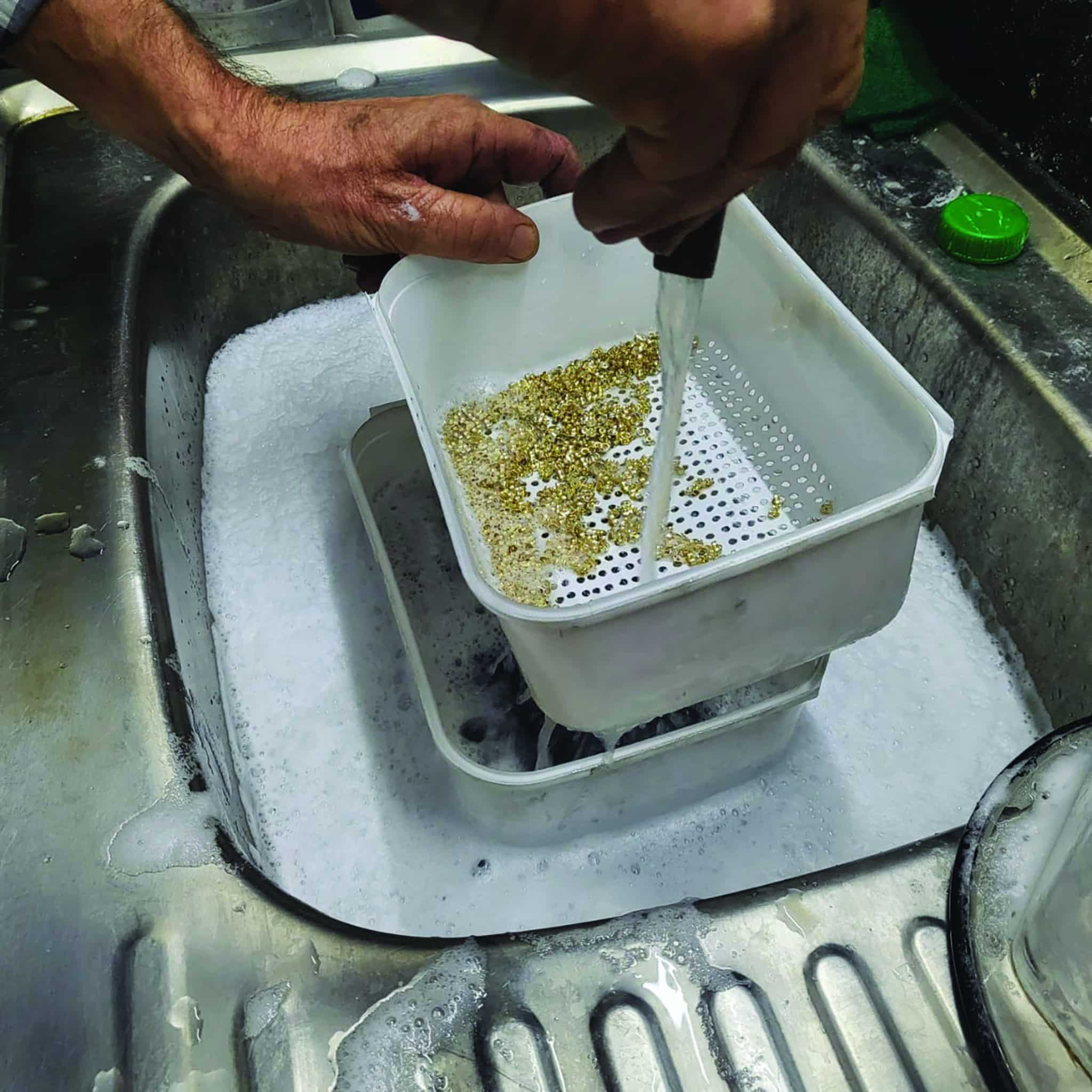
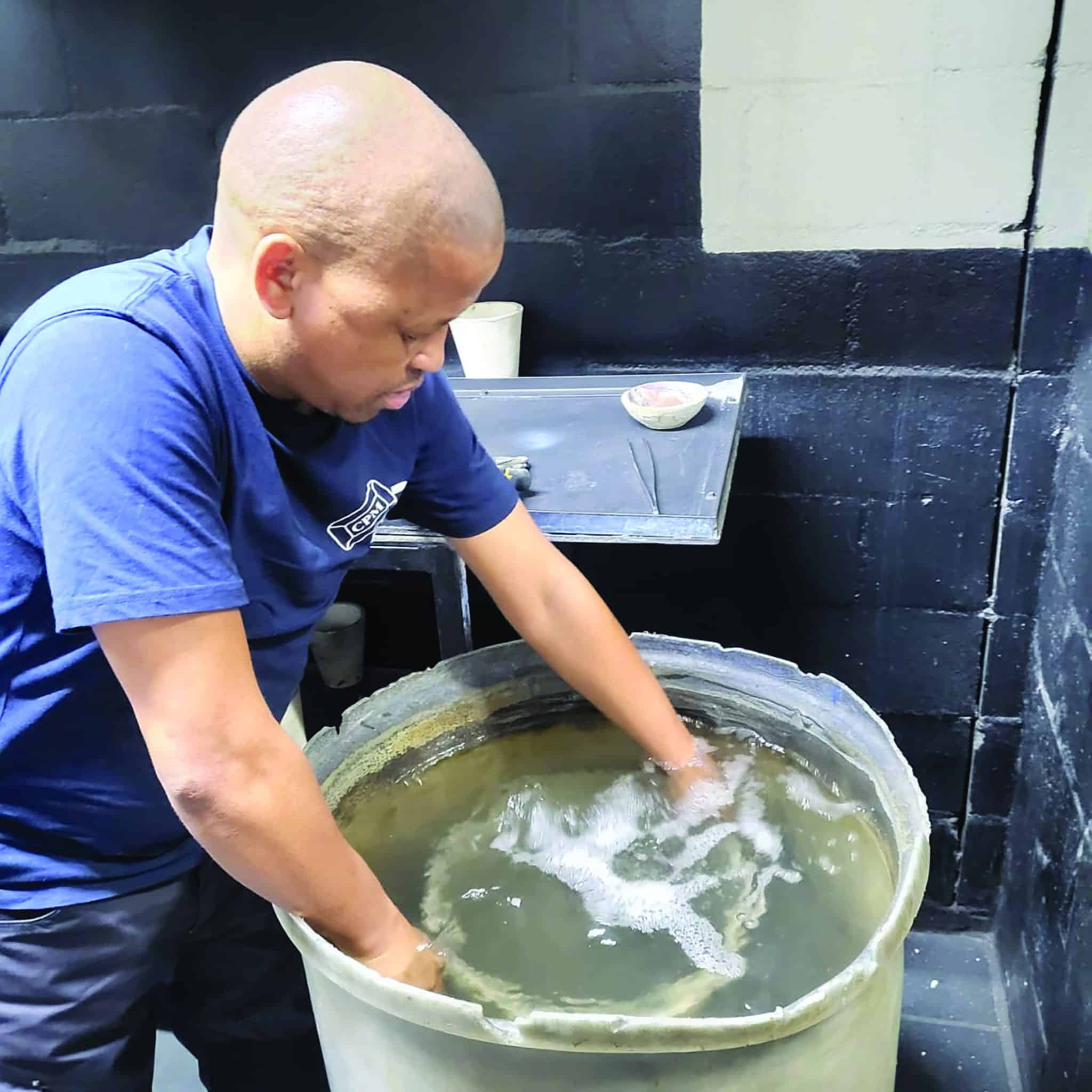
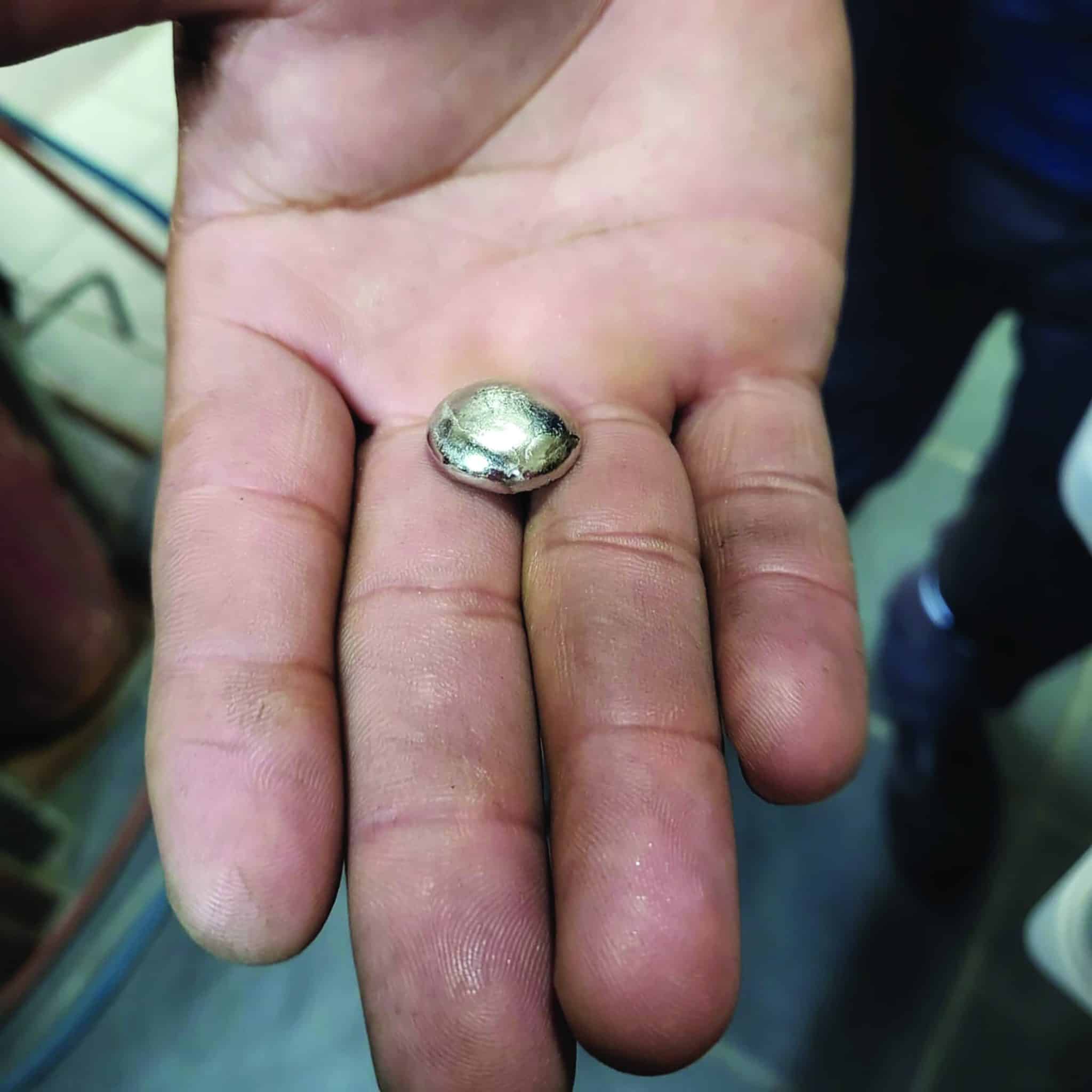
Every creation begins with granulated metal – silver, gold, or platinum – all of which forms the basis for CPM’s high-purity work. Each granule is made from pure metal: 24-carat gold (99.99% purity) or 99.9% silver. Neill starts by pouring the granulated metal into a crucible, a heat-resistant container designed to withstand extreme temperatures. “We’ll take granulated silver or gold, turn up the heat, and melt it down in the crucible,” he explains, demonstrating the process. Timing and temperature control are crucial. “It’s all about timing and flame,” Neill notes. “You can’t spend too long, otherwise you get a lot of loss. And the flame has to match the metal – each one needs a different temperature.” When producing granulated gold or silver, molten metal is poured directly into cold water, breaking up into tiny spheres instead of forming a solid slab. “That’s how we get granules,” Neill says.
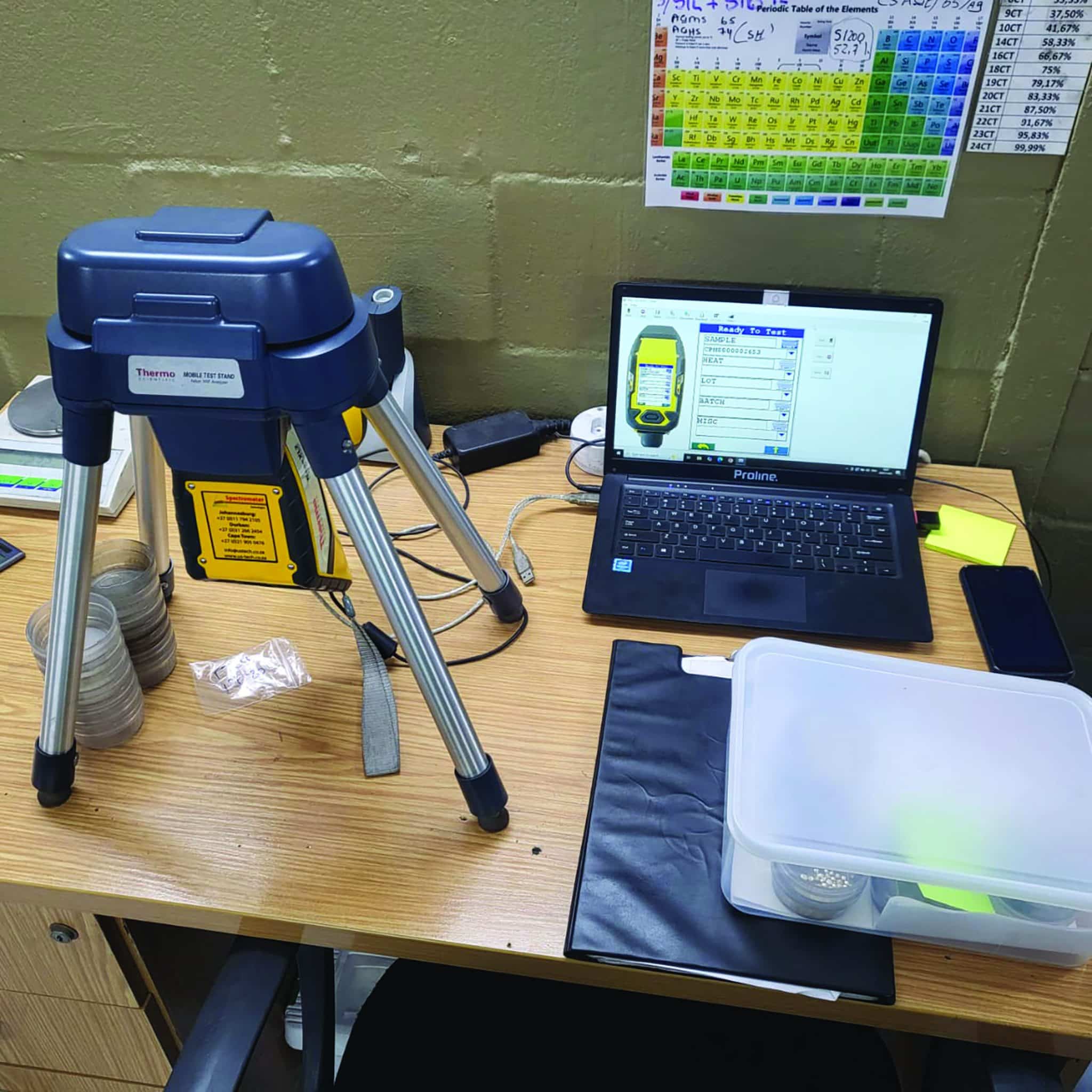
Each melt is precisely weighed, tracked, and recorded. “If I get 100 grams to melt, I sign for it,” Neill explains. “When it comes back up, it’s weighed again. We scan the metal afterwards to make sure the alloy is right – if we say it’s 37.5% gold, that scan must confirm it. If it’s under, there’s a problem.”
CASTING AND ROLLING
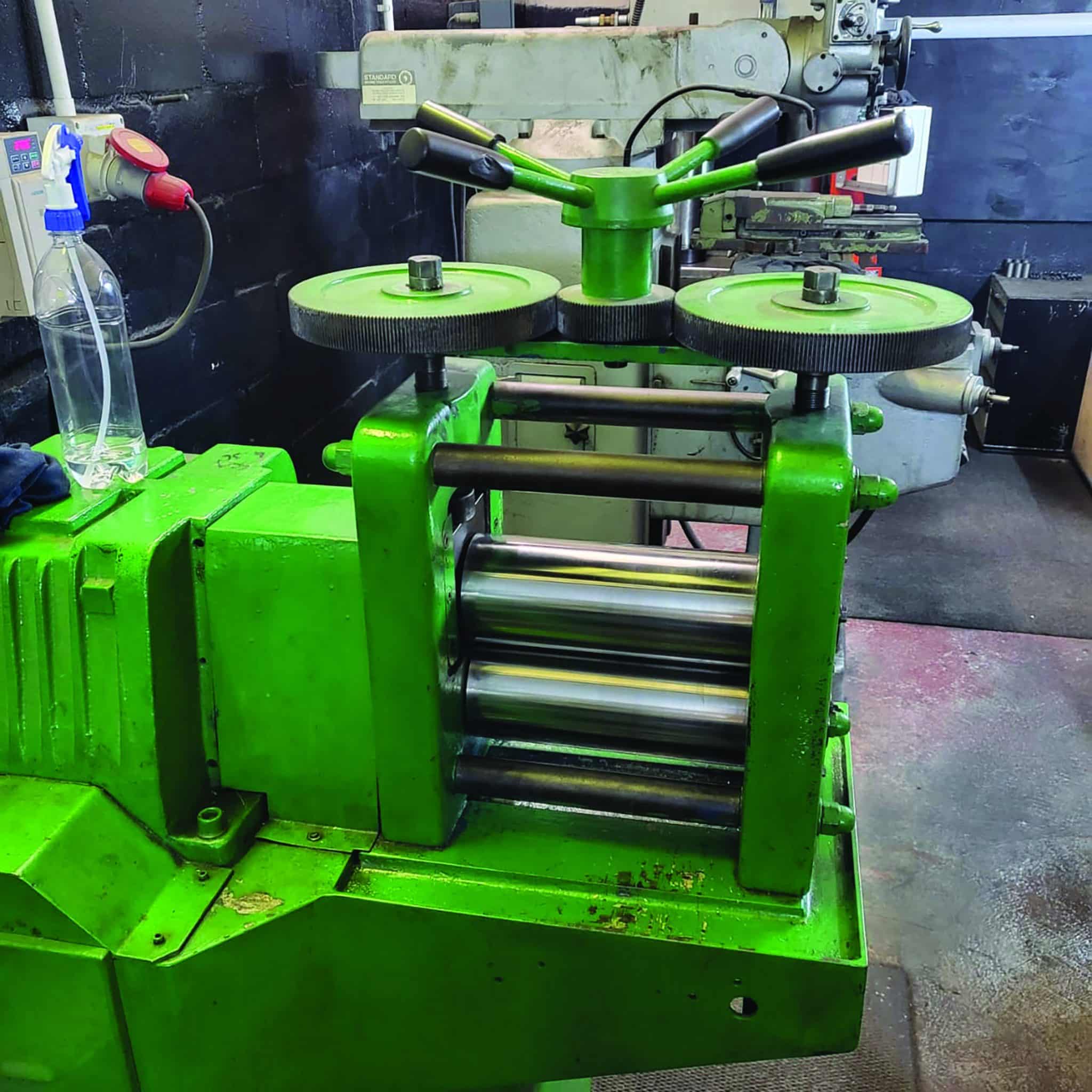
Once melted, the metal is poured into molds to form solid plates.
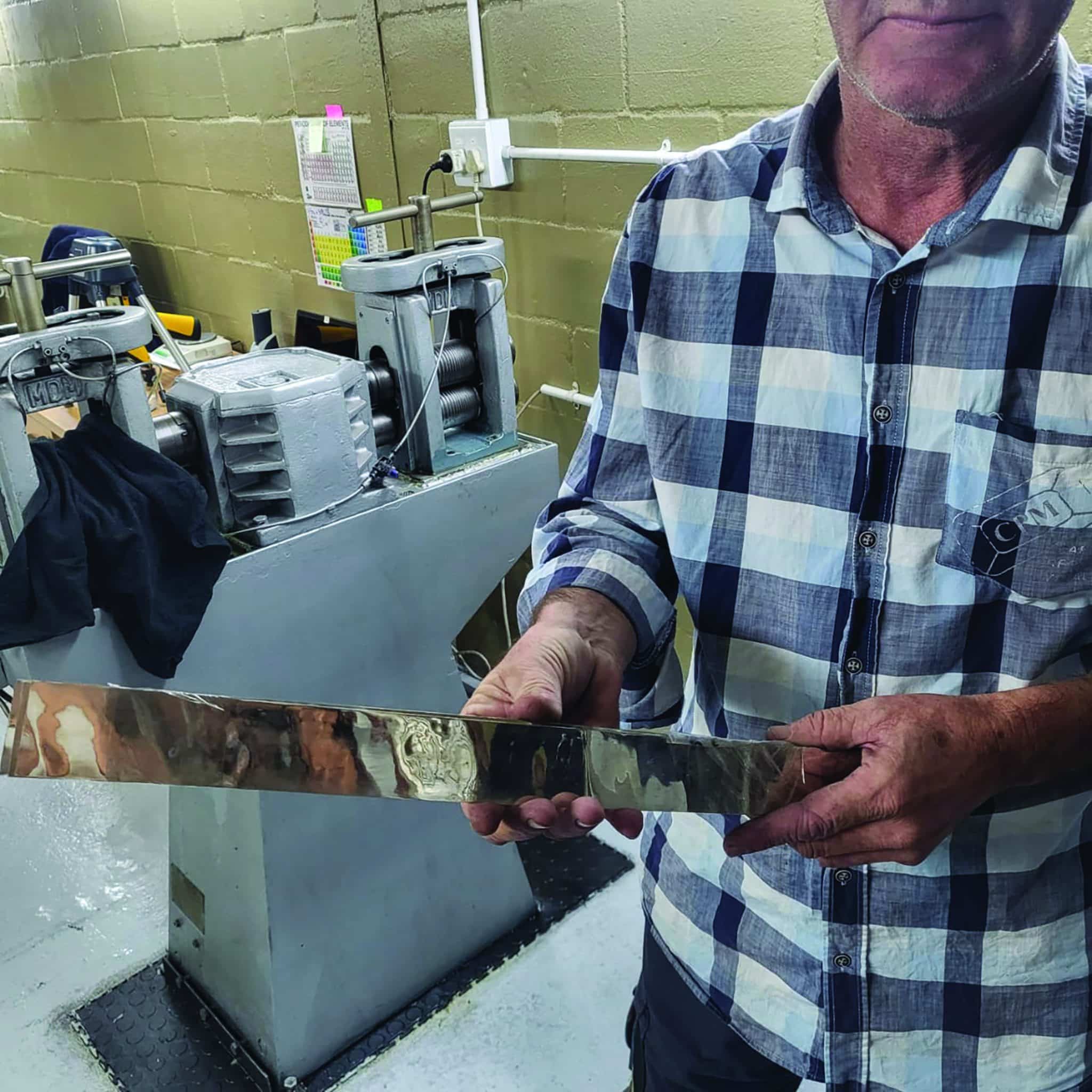
After cooling, each plate is cleaned and rolled to the correct
thickness for the product being made. “Depending on the medallion
size – 32, 38, or 50 millimetres – we work out the exact thickness
and weight,” Neill explains.
But rolling compresses the metal, making it hard. To keep it
workable, CPM uses a process called annealing. “Every time you roll,
you anneal for about 15 minutes,” Neill says. “Annealing softens the
metal again. When you roll, it compresses the molecules – you’ve got
to release them.”
This cycle of rolling and annealing continues until the metal reaches
the perfect gauge for cutting blanks or shaping into components.
CUTTING AND PRESSING
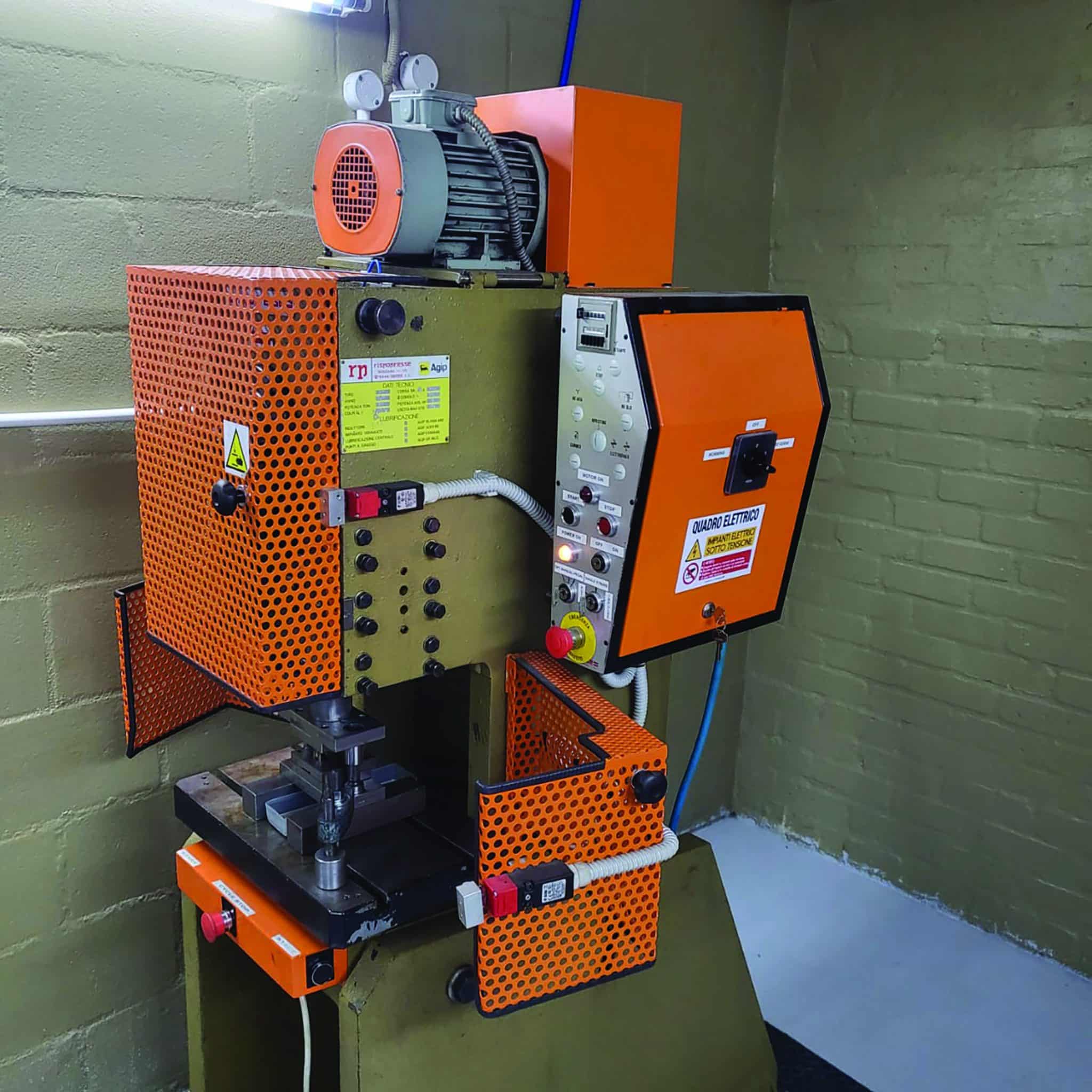
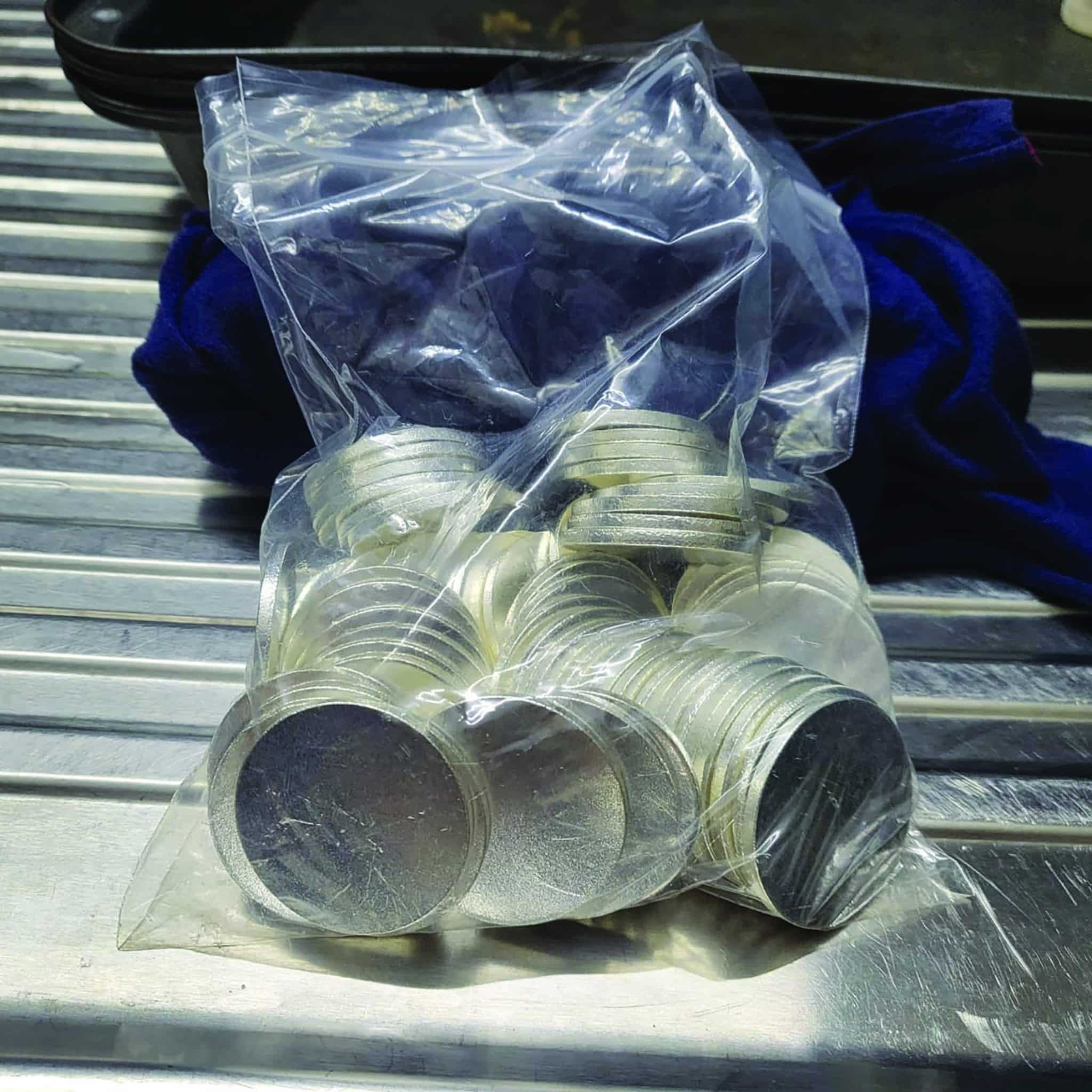
Once rolled, the sheets are cut into blanks – the flat discs that will eventually become medallions. Using an electric press, CPM punches out these blanks using interchangeable collars to suit different medallion sizes. After cutting, the blanks are annealed again. “The press condenses the metal,” Neill says. “We anneal afterwards to release the molecules and make it soft again – ready for striking.”
CLEANING AND POLISHING
Before striking, every blank must be absolutely spotless. “We put the blanks into the ultrasonic cleaner,” Neill explains. “That takes off all the dirt and grease. Then they go into the tumbler to polish, depending on the finish we want.” After polishing, the blanks are cleaned ultrasonically once more, steam-cleaned, and carefully wrapped to prevent any contamination. “Once it’s clean, you don’t touch it again,” Neill insists. “Fingerprints can ruin the finish.”
STRIKING THE MEDALLION
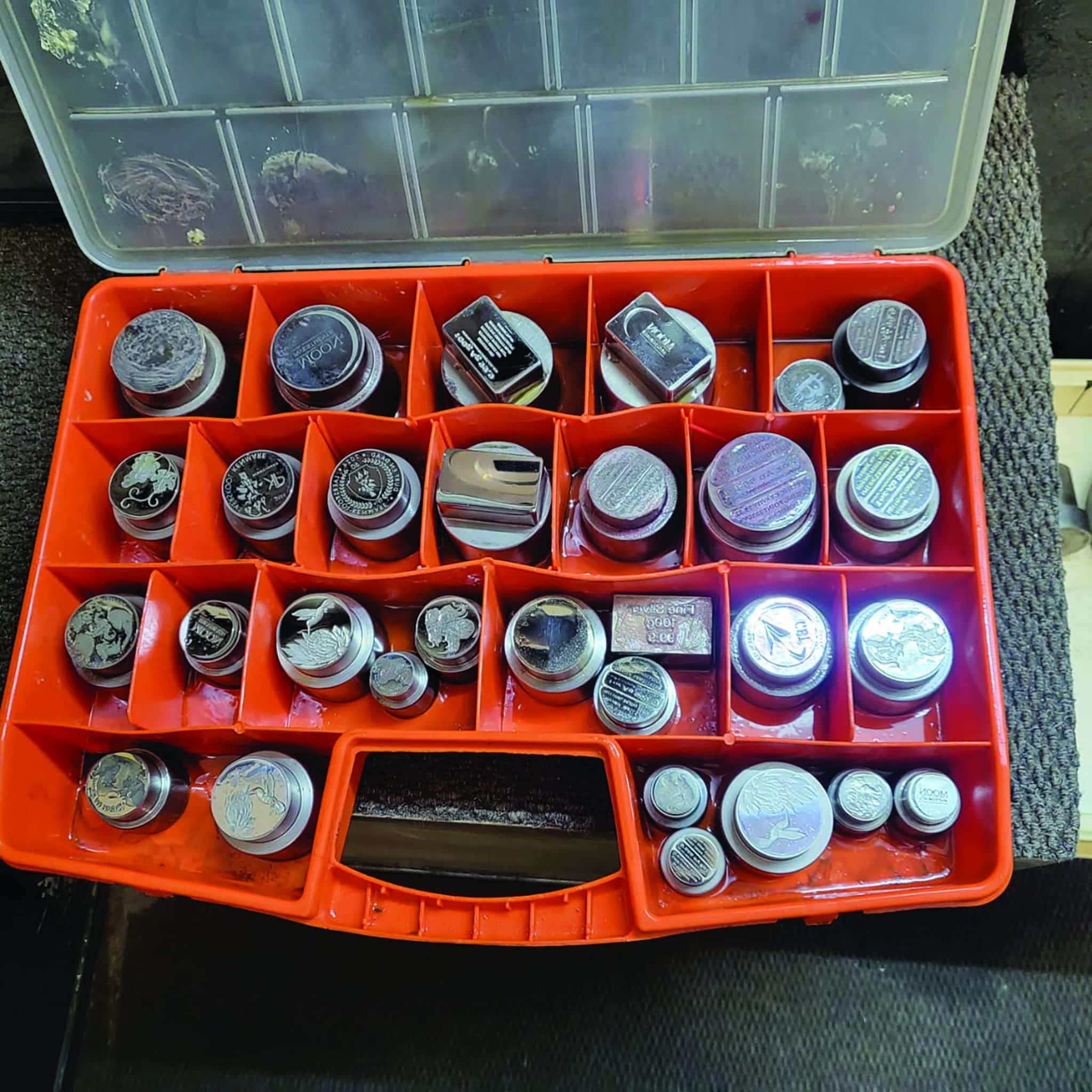
Our Moon Investments production part of the Manufacturing Hub focusses on medallions that are 24-carat gold (99.99% purity) or 99.9% silver. Now comes the defining moment – the striking. CPM’s main press uses both a top and bottom die, made from hardened, high-grade steel. Each die bears an engraved design, one for the obverse and one for the reverse. “The bottom die sits in the collar,” Neill explains, pointing to the setup. “The blank goes in between, and the top die comes down with about three tons of pressure.” Depending on the design and depth, the medallion may be struck multiple times. “Some are 2D, others are 3D,” Neill adds. “The French
ones, they mostly strike twice. It just depends on the detail you need.”
STRIKING THE MEDALLION
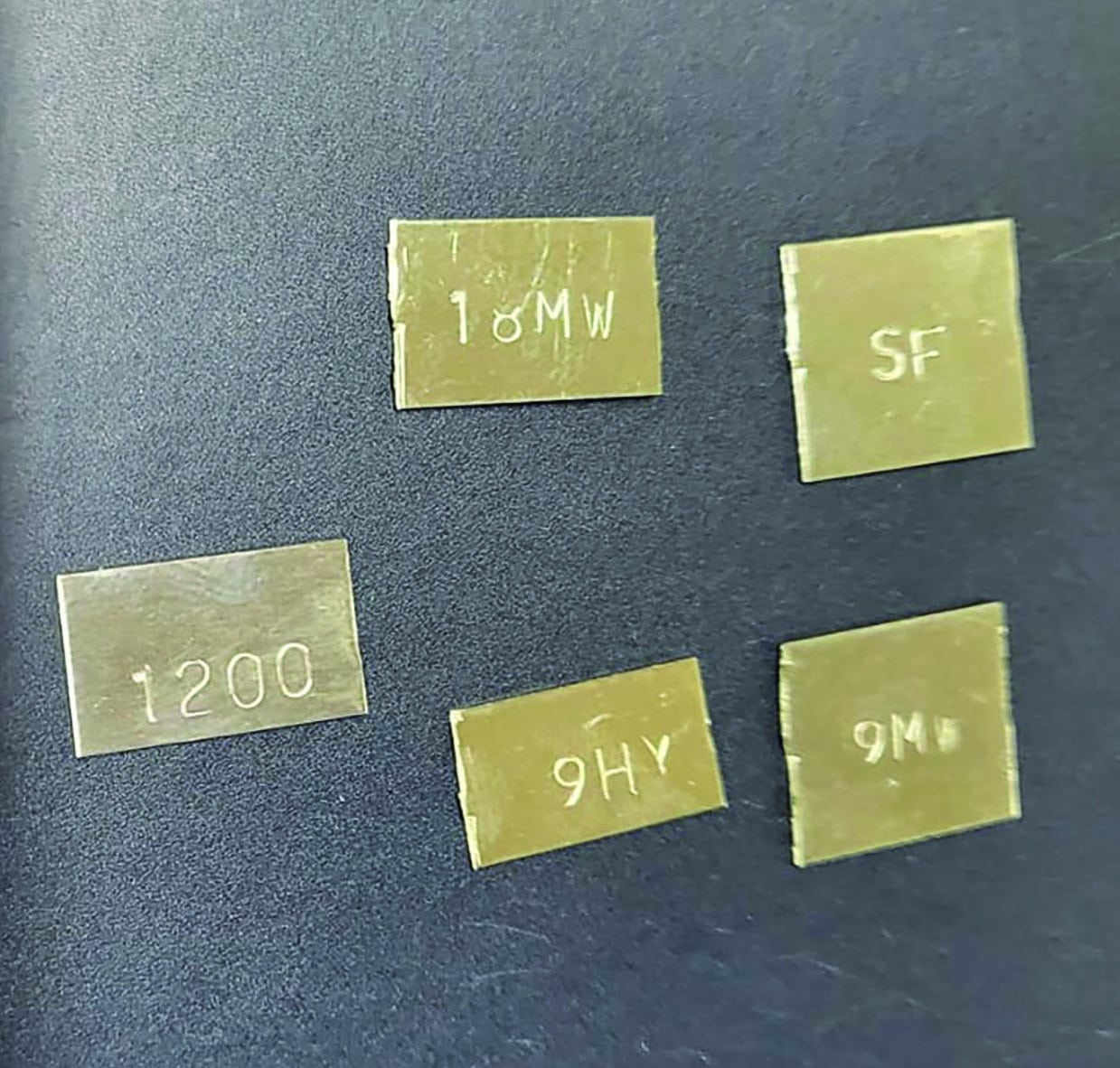
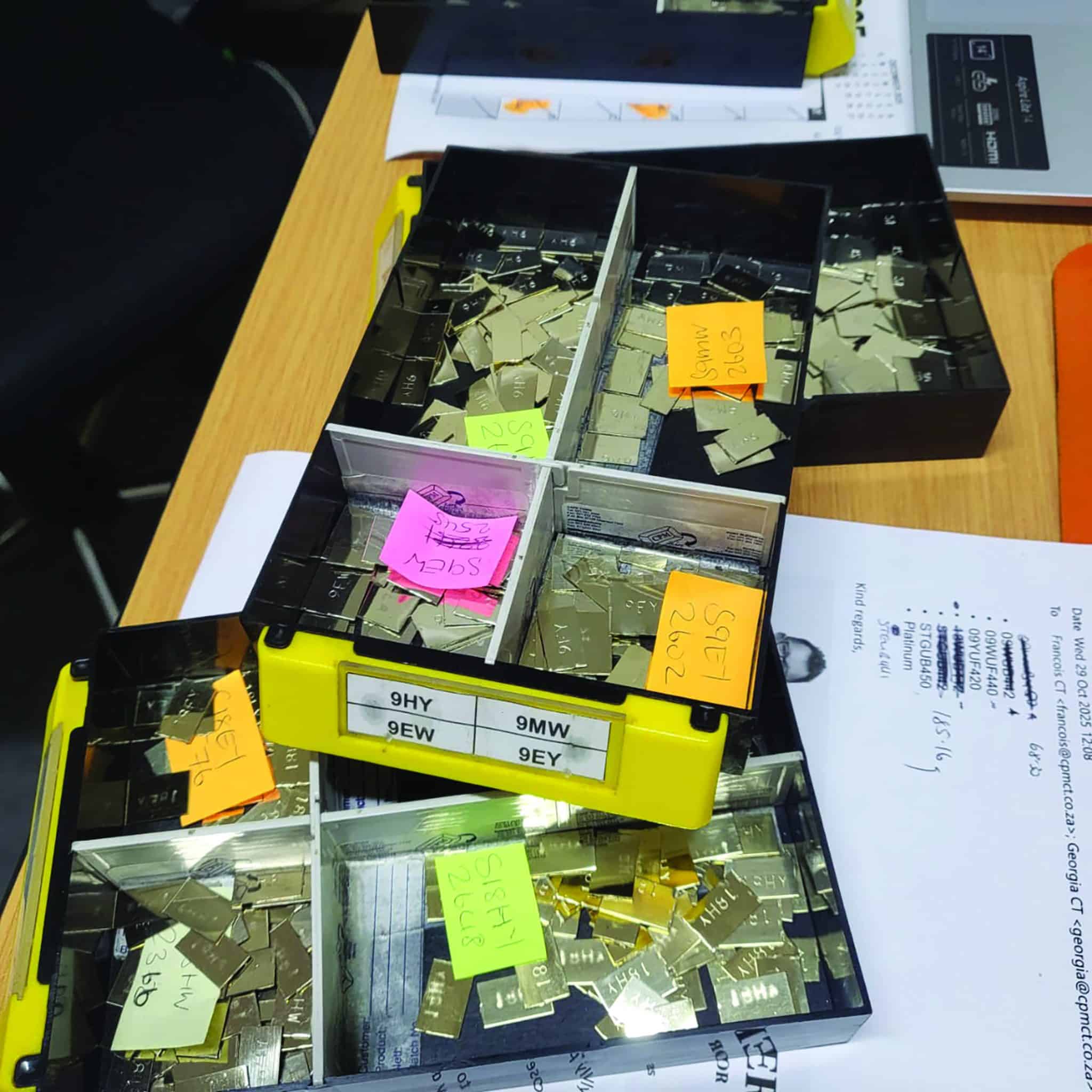
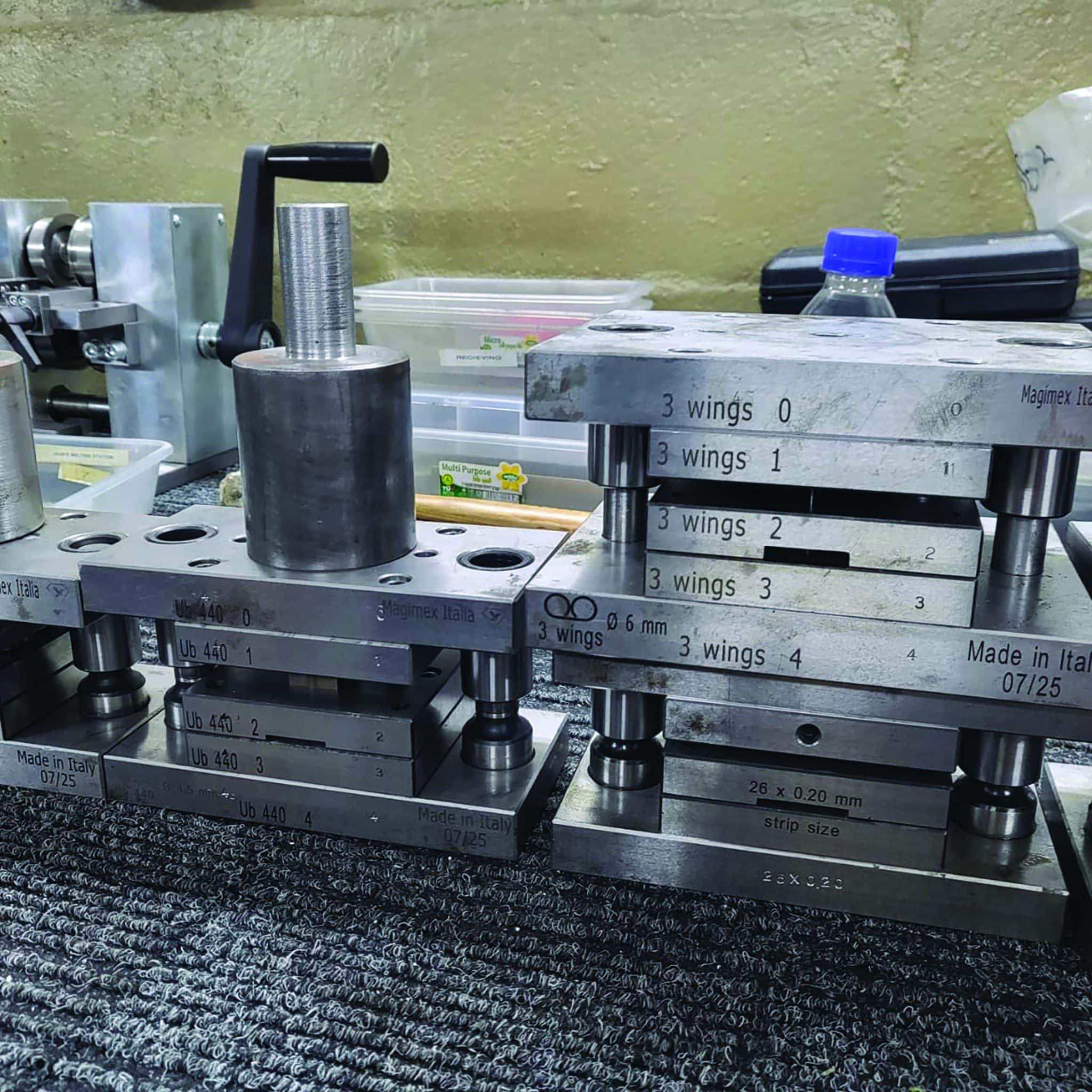
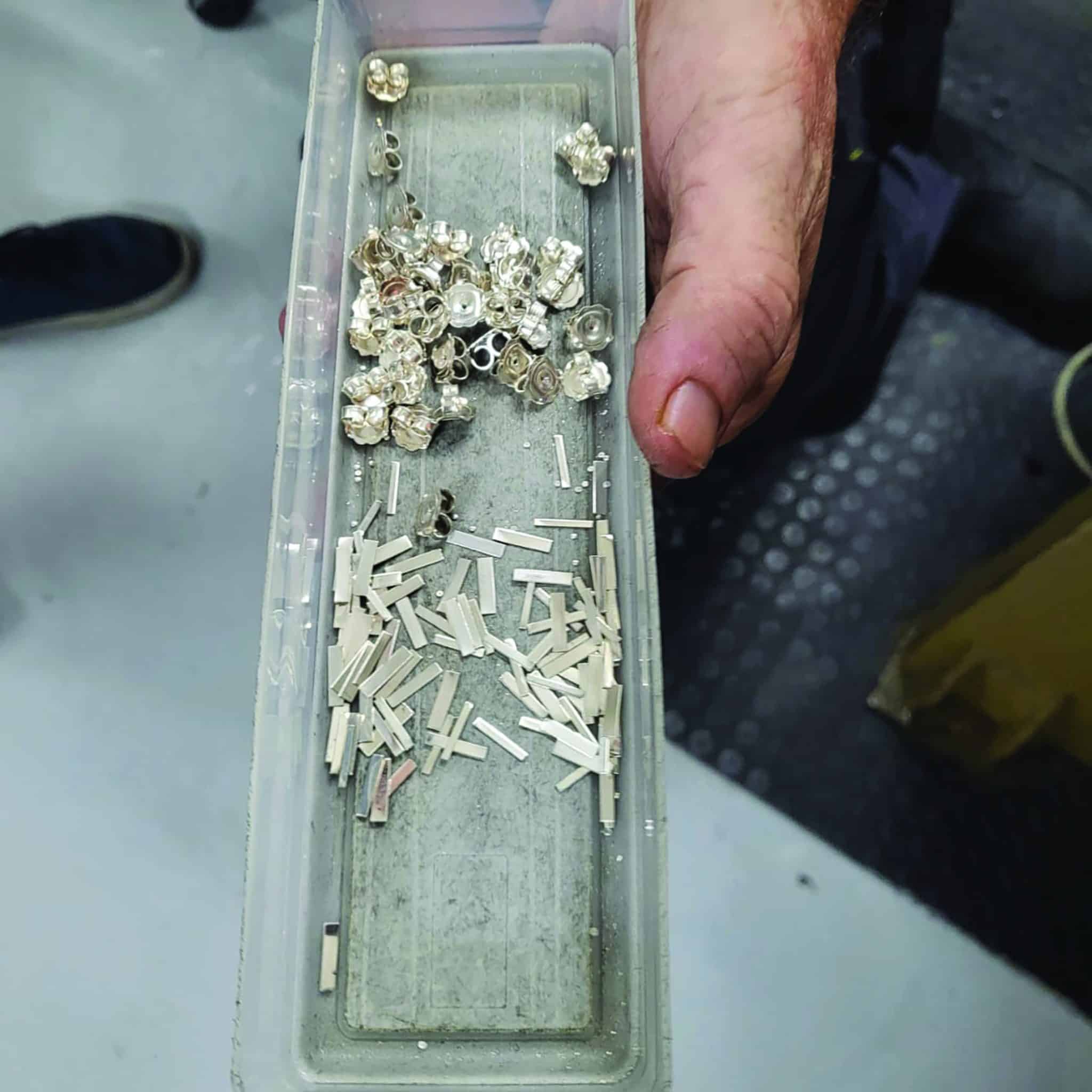
Beyond medallions, CPM also manufactures solders and alloys for jewellers. Rolled plates are reduced to fine gauges – usually between 0.45 and 0.50mm – and cut into strips that are fed through a solder machine. “These are used for jewellery work,” Neill explains. “They cut the strip into tiny solder blocks. Jewellers use them to join rings, chains – all your fine soldering work.”
THE BUTTERFLY MACHINE
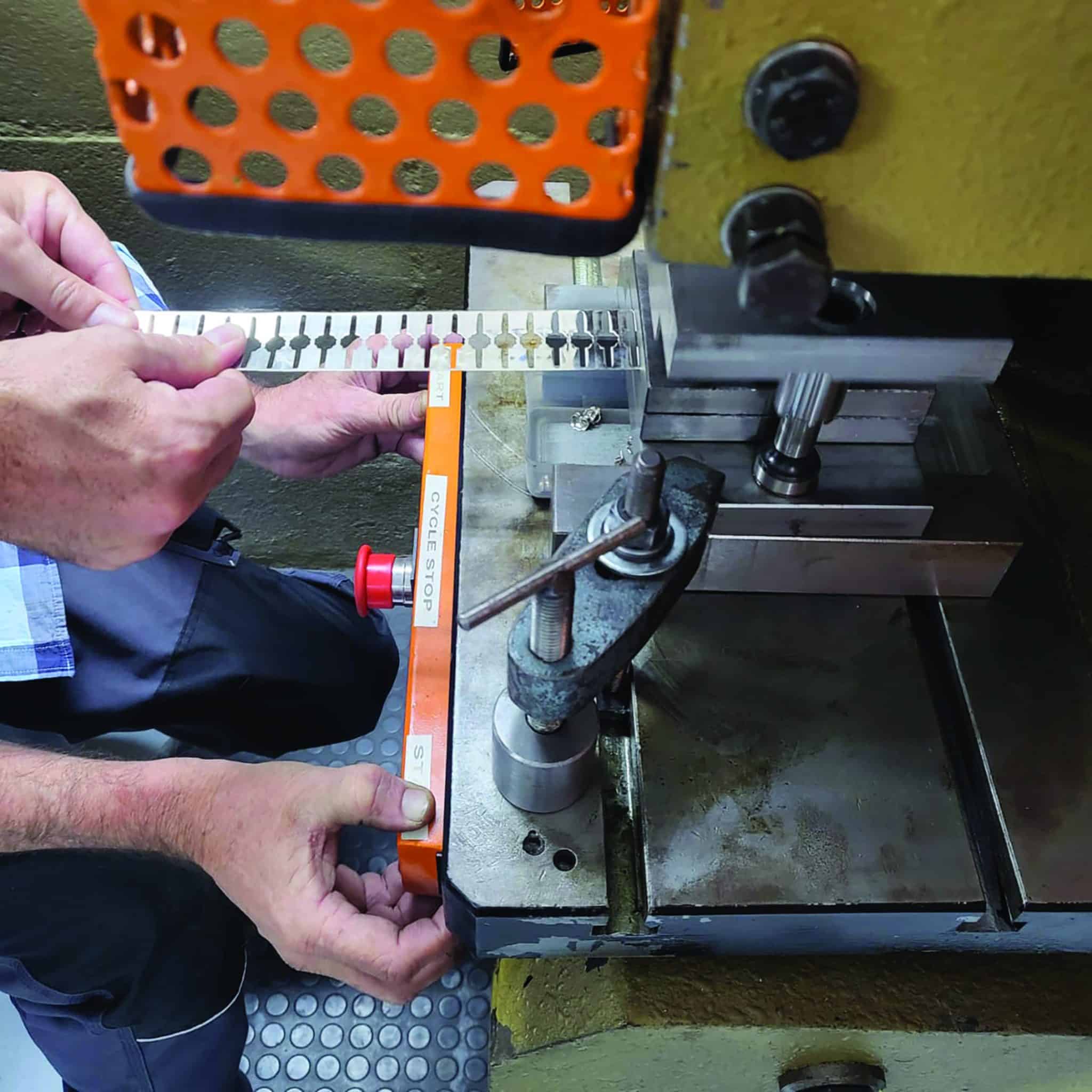
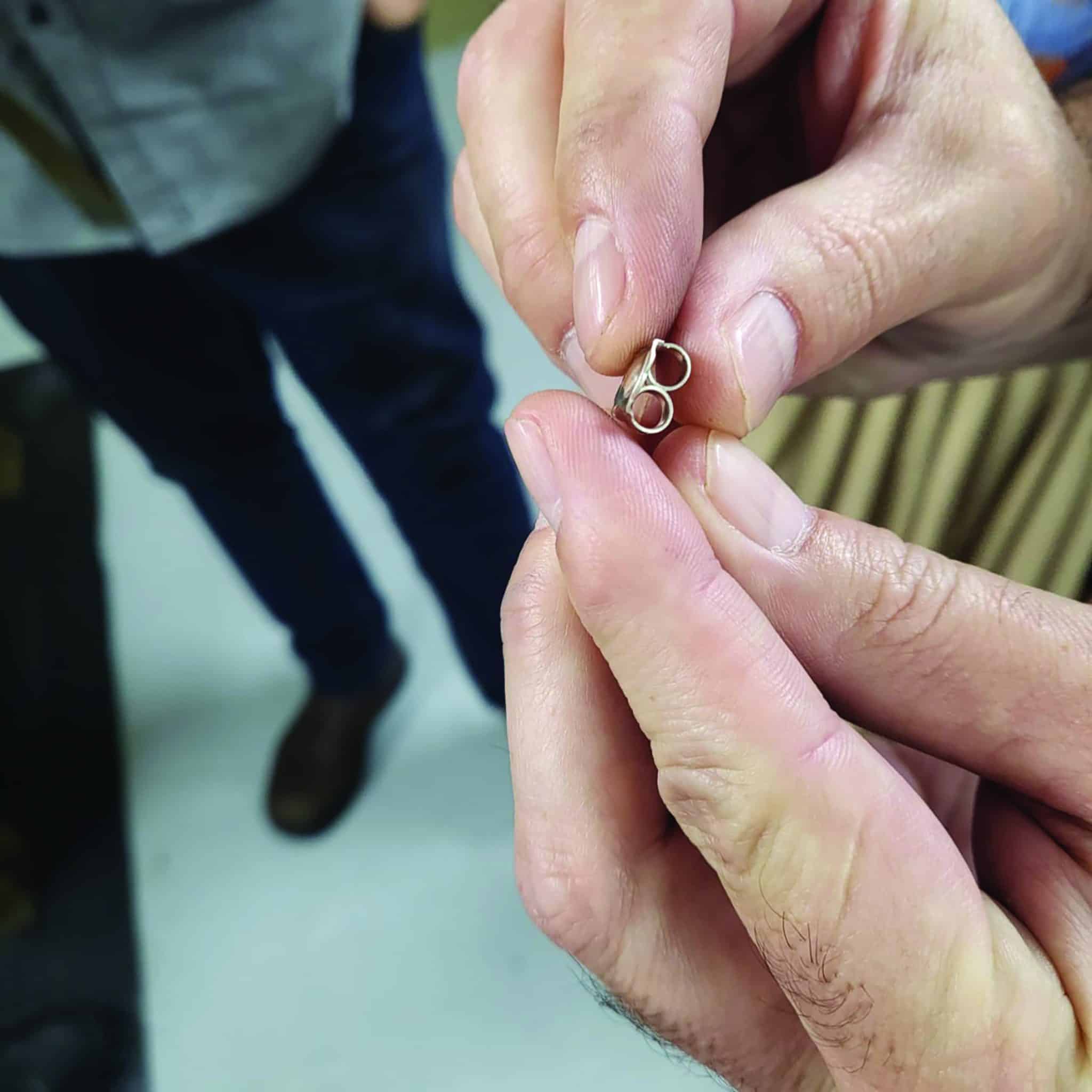
CPM’s expertise extends to manufacturing jewellery findings, such as the small “butterflies” used for earring backs. Imported from Italy, the butterfly machine runs through multiple die stages – cropping, pinhole forming, rounding, and bending. “There are four or five stages inside the die,” Neill says. “Each one
shapes the strip a bit more until it becomes the finished butterfly.” After stamping, the components are tumbled and polished using a mild polishing soap. “Nothing too harsh or chemical,” Neill notes. “We keep it clean and safe – nothing hazardous to your health.”
What starts as a handful of granules becomes something precise, something beautiful.
It’s all about control, patience, and respect for the metal.
Neill Knipe – Team Leader Investment
RHODIUM PLATING: THE FINAL TOUCH
For white gold pieces, CPM uses rhodium plating to achieve a brilliant white finish. “Our white gold butterflies doesn’t contain palladium – it keeps costs down,” Neill explains. “So we plate with rhodium to get that bright white colour.” The process begins with cleaning: ultrasonic, then electric cleaning in a heated solution, followed by rinsing in deionized water. The components are then immersed in a rhodium bath. “We use a titanium anode,” Neill says. “Positive to the anode, negative to the product. About 3 to 3.5 volts for 30 to 40 seconds – and it’s done.”
PLATINUM, QUALITY CONTROL,
AND SISTERHOOD
CPM also works with platinum, producing platinum buttons for casting clients – small discs used in casting machines. Every stage of the process is tightly controlled, from weighingraw metals to scanning finished alloys. “We can’t send anything out unless it meets standard,” Neill says. “Everything must scan correctly – purity, alloy mix, everything.” He adds that CPM’s sister company, Moon Investments, works
alongside them to support the broader production chain. “CPM and Moon are sister companies,” he says. “We work hand in hand.”
A CULTURE OF CRAFTSMANSHIP
Walking through the CPM Manufacturing Hub, one sees more than a production line – it’s a living craft. From the rhythmic hum of the furnaces to the soft ring of the presses, every sound marks another step in a process honed by skill and experience. “What starts as a handful of granules becomes something precise, something beautiful,” Neill reflects. “It’s all about control, patience, and respect for the metal.” From melting and alloying to pressing, polishing, and plating, CPM’s work embodies the heart of jewellery manufacturing: a blend of artistry and technical mastery that turns raw materials into enduring treasures.
