
Let us use diamond as an example, as it is the most widely utilised gem in jewellery.
The first step would be to determine whether the stone in question is a diamond or one of the many simulants available on the market. Traditionally, a diamond tester was used for this task. Before gem-quality synthetic moissanite became available, diamond testers relied solely on measuring thermal conductivity, which was effective at distinguishing diamonds from the simulants of that time.
However, this changed with the arrival of synthetic moissanite, which could pass the thermal conductivity test and be mistaken for a diamond. Tool manufacturers had to find a new property to distinguish diamonds from synthetic moissanite. They eventually settled on electrical conductivity, as most diamonds do not conduct electricity—though blue and black diamonds may be exceptions. This led to the development of dual testers that assess both thermal and electrical conductivity. Even so, a skilled operator is still necessary—someone who understands both the gem’s properties and the limitations of the device, as well as factors that could cause false readings, such as small sample size or contact with a metal setting.
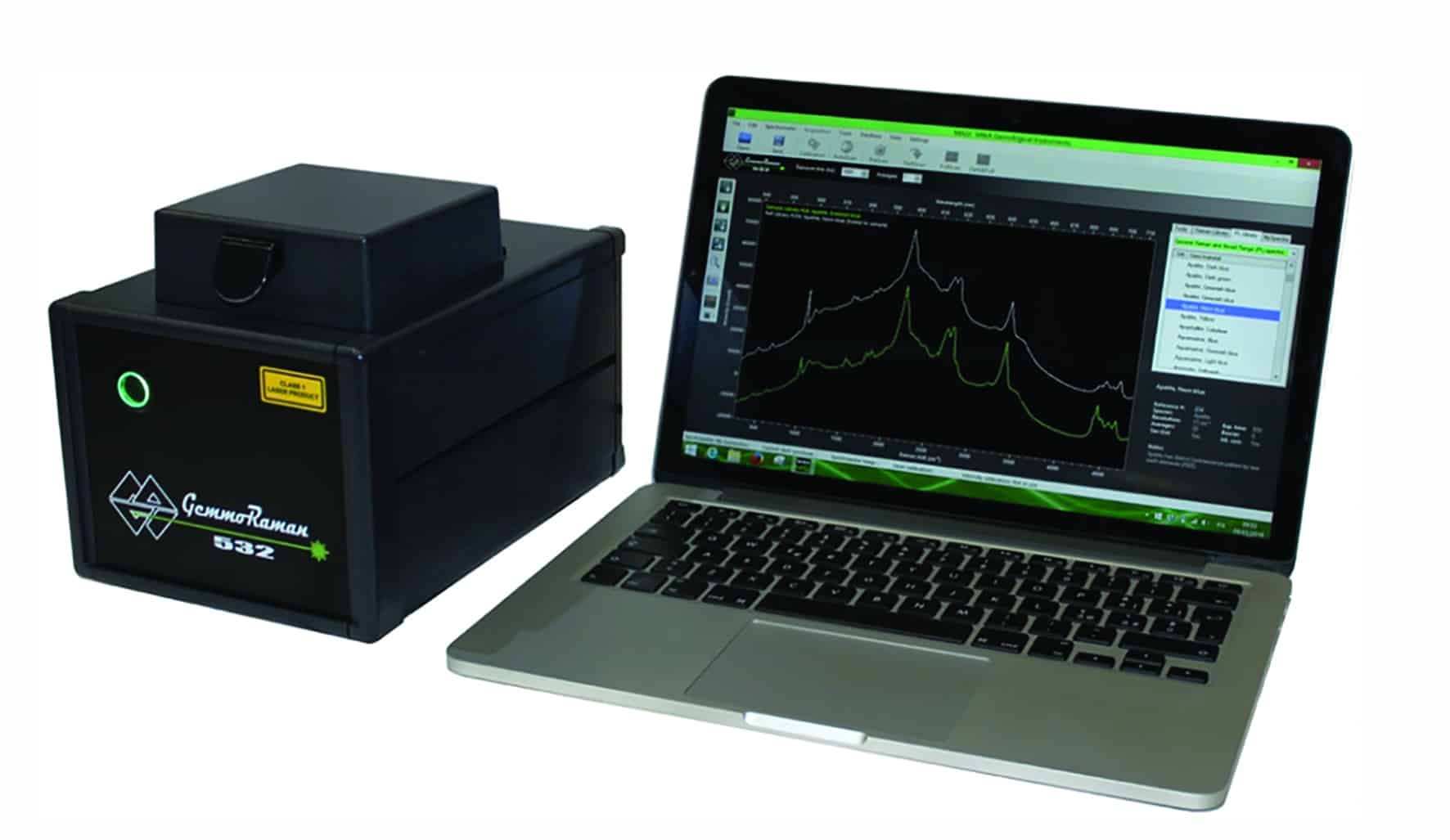
Once it has been confirmed that the gem is indeed a diamond, the next step is to determine its growth origin. Was it naturally formed deep within the Earth’s upper mantle over millions of years, or was it synthetically grown by humans in a matter of weeks? Colour enhancements can range from something as simple as ink on the girdle or coatings, to advanced treatments like irradiation, annealing, and High Pressure High Temperature (HPHT) treatment—or a combination of these methods. Detecting such treatments requires advanced knowledge and equipment, including the Fourier Transform Infrared (FTIR) spectrometer, UV-VIS-NIR spectrometer, Raman spectrometer, the DiamondView, as well as traditional tools like the microscope, polariscope, and long and short-wave ultraviolet light.
A gemmologist trying to detect these advanced colour enhancements must consider results from all instruments and interpret them within the context of a broader picture. No single device should be relied upon in isolation for this complex task.